A complete guide to home rehabilitation essentials

Patients ask for a shopping list, and the honest answer is that it is shorter than they expect. Most home rehabilitation programmes are built from bodyweight, a band, and something to lie on. The equipment that helps is the equipment that makes a prescribed exercise easier to do correctly and more likely to be done at all. Everything else is optional, and some of it is actively counterproductive because it substitutes a machine for a movement the programme is trying to restore.
The four things worth owning
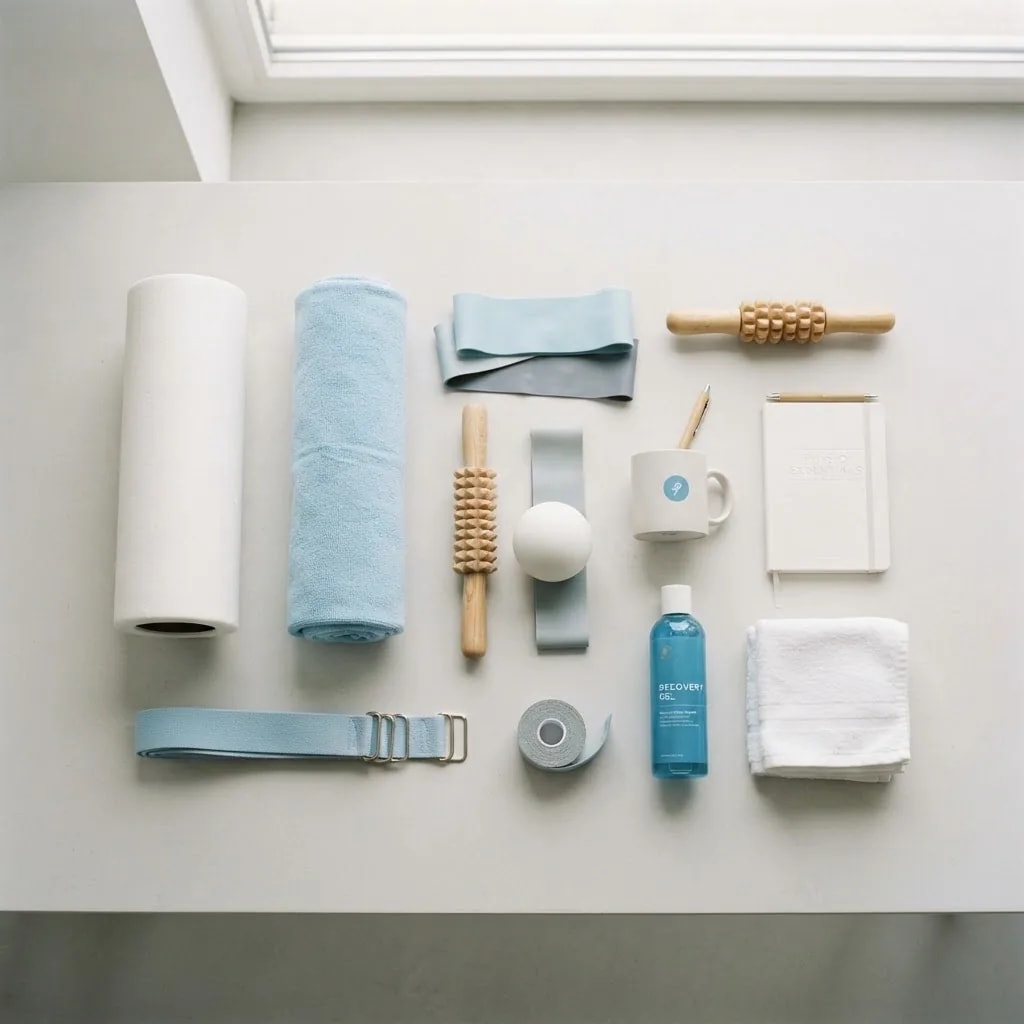
A graduated resistance band set is the single most useful purchase. Five resistances cover progression from a post-operative shoulder through to late-stage strengthening without buying anything further, and bands load a movement through its whole range in a way a fixed weight does not. A textured foam roller handles self-myofascial work and doubles as a balance and thoracic-mobility tool. A non-slip mat makes floor work possible on a tiled Albanian apartment floor, which sounds trivial and is the difference between a programme being done and being skipped. Finally, something to measure with — a phone timer and a notebook are enough. Adherence improves measurably when people record what they did.
What to add if the programme asks for it
Therapy putty for hand and finger rehabilitation, where nothing else substitutes well. A balance board once single-leg stability work begins, but not before — an unstable surface introduced too early just teaches compensation. A small percussion device is genuinely useful for warming tissue before a session and for delayed-onset soreness after one, though it treats symptoms rather than driving recovery. Compression boots and cryotherapy wraps belong in this group too: pleasant, occasionally helpful for swelling and recovery between hard sessions, and not a replacement for the loading that actually rebuilds tissue.
What to skip
Passive devices marketed as doing the work for you, machines that isolate a joint through a fixed path, and anything that promises to substitute for exercise. Also worth skipping: buying a heavier band set than prescribed because the light ones feel too easy. Early-stage rehabilitation loads are deliberately low, and the discomfort of doing something that feels trivially easy is a normal part of it. Progressing on your own schedule rather than the therapist’s is the most common way a home programme goes wrong.
Making the programme happen
Keep the equipment where the exercises are done, not in a cupboard — visible equipment gets used. Attach the session to something that already happens daily, so it is anchored rather than remembered. Do fewer exercises more often rather than a long session twice a week; three short sessions beat one heroic one for both tissue adaptation and adherence. And write down what you did, including the sessions you skipped. A therapist can adjust a programme that is being followed sixty per cent of the time, but only if they know that is what is happening.
When to stop and ask
Some discomfort during rehabilitation is expected and some is information. Pain that increases session to session rather than settling, pain that wakes you at night, new swelling, numbness, pins and needles, or any loss of range you previously had are all reasons to stop and contact your therapist before continuing. Home equipment makes a programme convenient; it does not make it self-supervising, and a five-minute phone call is cheaper than an interrupted recovery.